In short
- A pale Pacific hardwood that weathers to an even silver-grey.
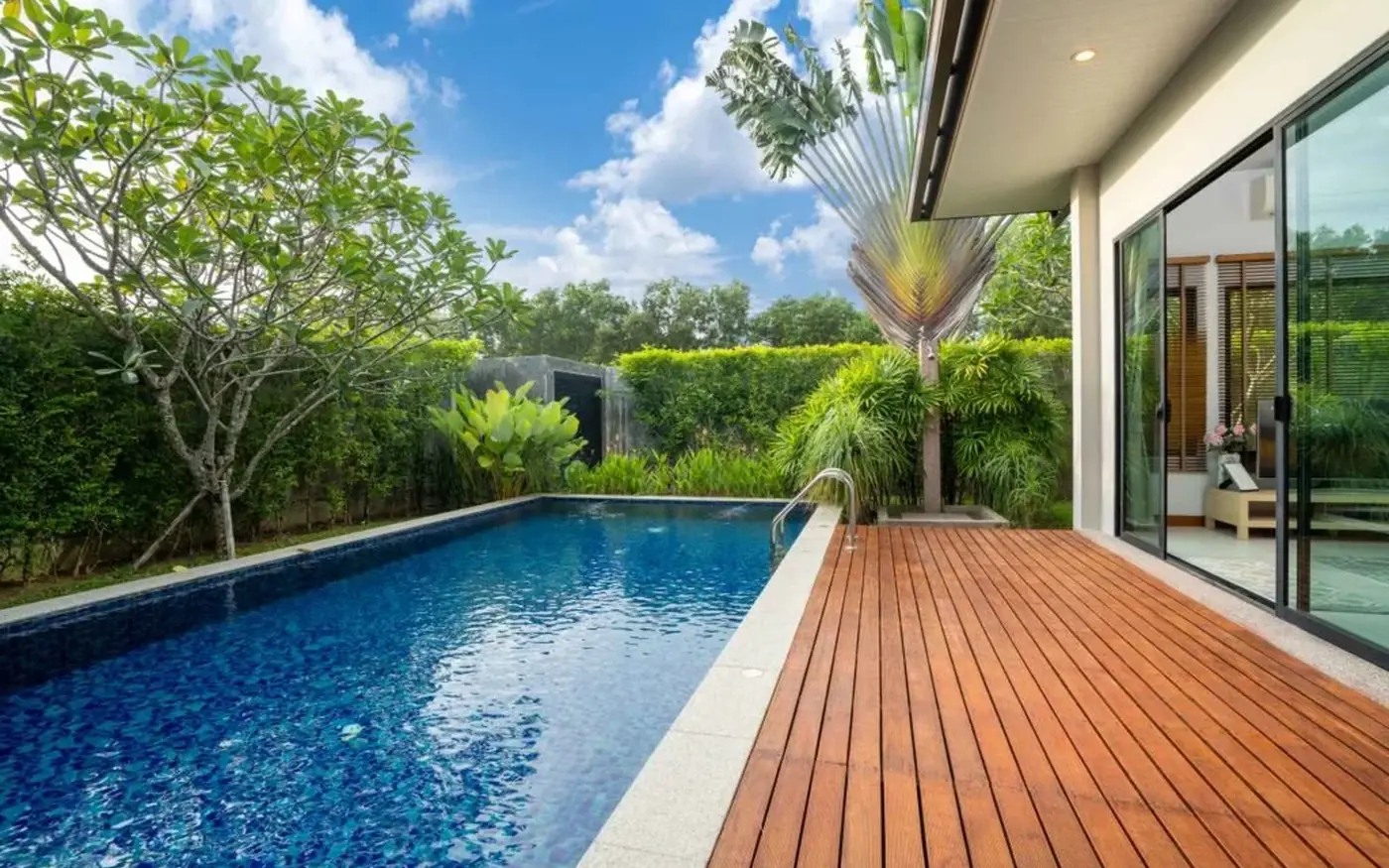
- Very little tannin bleed, so it suits decks above paving or pools.
- About $900 to $1,400 per m² built.
Vitex is a hardwood from the Solomon Islands and Papua New Guinea. It has become the main alternative to kwila on New Zealand decks, mostly because it does not bleed.
What vitex looks like
New boards are pale, between cream and light olive-brown, with a fine, even grain. Left unoiled, vitex turns silver-grey within a year and does so evenly, which is why architects like it. Oiled, it takes on a warm honey colour.
Pros
- Almost no tannin bleed. It will not stain concrete, pavers or pool surrounds the way new kwila does.
- Stable. It moves little as the weather changes and holds fixings well.
- Comfortable. A smooth, dense surface with few splinters.
- Weathers well. If you want a deck you can leave to go grey, vitex is the timber for it.
Cons
- Softer than kwila. It dents a little more easily under chair legs and dropped tools.
- Surface checking. Fine cracks can open on the surface in hot, dry weather, particularly on boards in full sun. They are cosmetic.
- Imported. Supply and price depend on shipping. Ask for certified timber.
What vitex decking costs
| Item | Guide price |
|---|---|
| Vitex deck, built, ground level | $900 to $1,400 per m² |
| Vitex boards only | About $80 to $120 per m² |
| Raised or sloping site | Add 30 to 60 percent |
The boards-only figure is a rough guide. Merchants price by the lineal metre and prices move.
Vitex or kwila?
| Vitex | Kwila | |
|---|---|---|
| Colour when new | Pale cream to olive | Red-brown |
| Colour when weathered | Even silver-grey | Silver-grey, less even |
| Tannin bleed | Very little | Heavy at first |
| Hardness | Hard | Harder |
| Price | Similar, often slightly less | Similar, often slightly more |
Choose vitex above paving, around pools and where you want a pale or silvered look. Choose kwila for a darker deck and the hardest wearing surface.
Looking after it
Fix with stainless steel screws, pre-drilled. Wash once or twice a year with a deck cleaner and a stiff broom. To keep the colour, apply a penetrating oil once the timber has had a few weeks to dry and repeat about once a year. In Canterbury, oil in spring or autumn, out of direct sun and with no frost due. See how to stain a deck.
Want vitex priced for your section? Our deck building service covers Christchurch and Canterbury.
Common questions
Is vitex better than kwila?
Neither is better. Vitex bleeds less and silvers more evenly. Kwila is harder and darker.
How long does vitex decking last?
Twenty years or more above ground with good fixing and ventilation.
Does vitex need to be oiled?
No. It can be left to weather. Oil it if you want to keep the honey colour and reduce surface cracking.