Home › Deck building
Deck Construction in Christchurch and Canterbury
New decks in pine, kwila, vitex and composite, from a step-down off the ranch slider to a raised deck with stairs, a balustrade and a consent.
- Free site visit and written, itemised quote
- Ground-level, raised, pool and multi-level decks
- Consent drawings and paperwork handled when a deck needs them
Get a free quote
Tell us about the job. We reply within one working day.
A deck is usually the cheapest square metre you can add to a house, and in Canterbury it gets used for most of the year. The job is to build one that still sits flat and looks right after ten winters of frost and ten summers of nor'west wind and hard sun.
That comes down to what you cannot see once the boards are on: how deep the piles go, how the frame is braced, how far apart the joists are, and what the fixings are made of. Those are the things to compare when you put two quotes side by side.
Types of deck we build
Ground-level decks
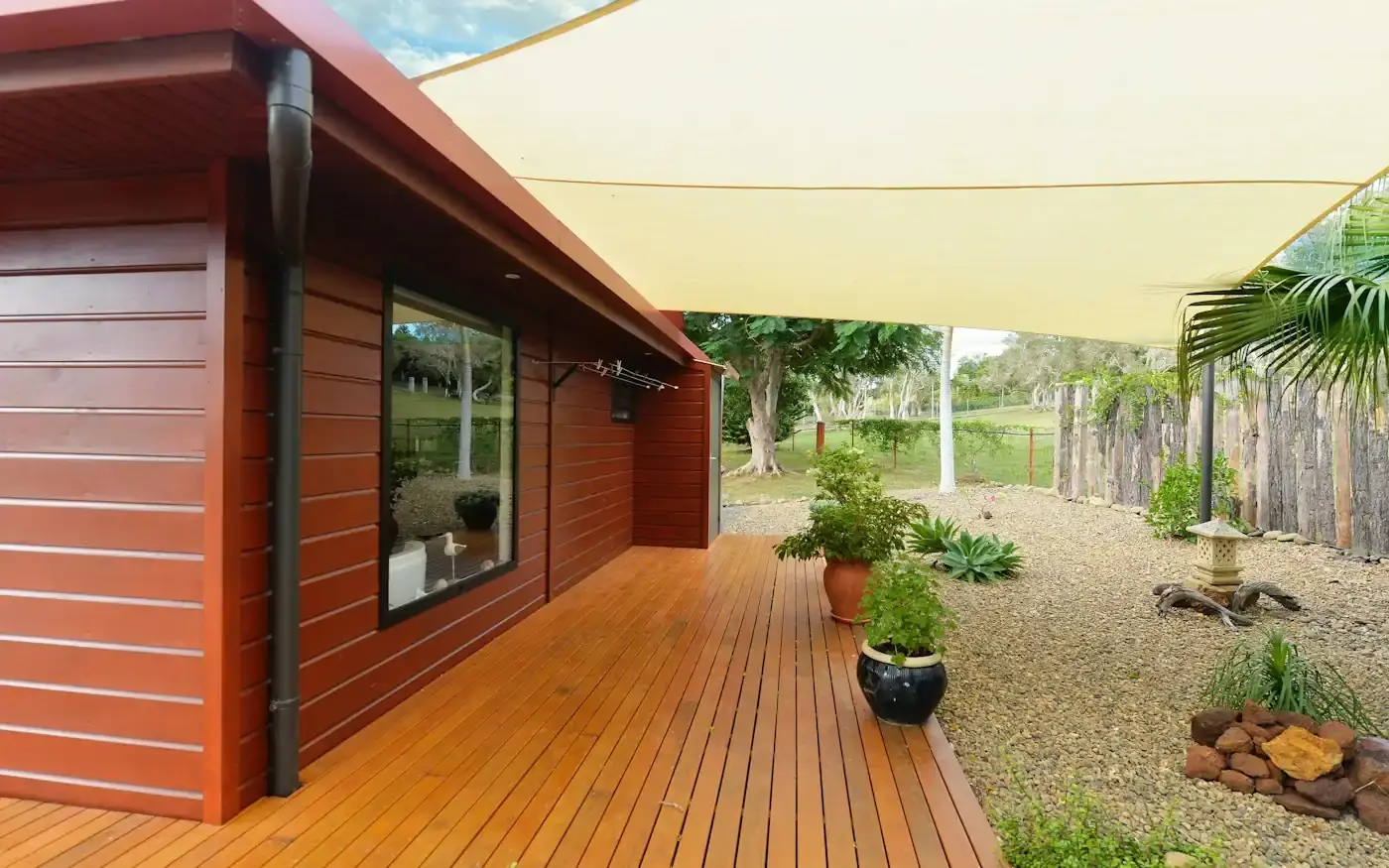
The most common job in Christchurch. Most houses built since the 1990s sit on a concrete slab, so the deck ends up only 150 to 300 mm off the ground. That is easy to walk onto, but it leaves little air under the frame. A low deck needs a frame rated for damp conditions, a clear gap for air to move, and ground that drains away from the house.
Raised decks
Older villas and bungalows have timber floors well above the ground, and hill sections fall away from the house. Once you could fall a metre or more you need a balustrade, and once a fall of more than 1.5 metres is possible the deck needs a building consent. Raised decks cost more per square metre because there is more timber under them and more bracing.
Pool and spa decks
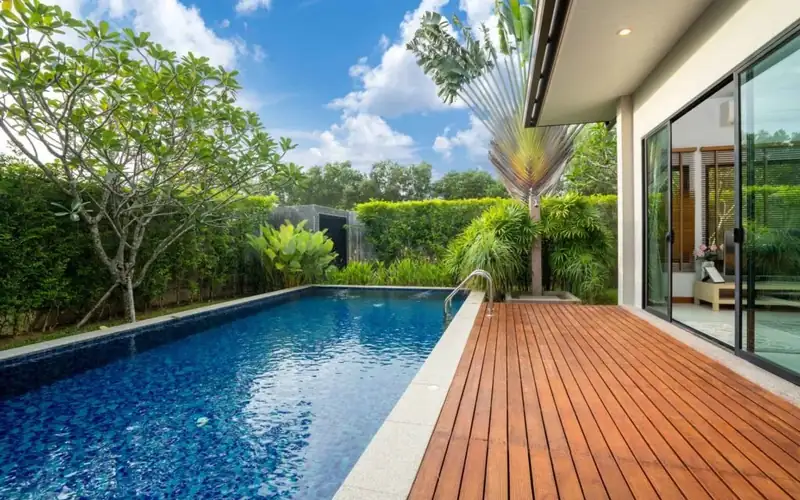
Boards stay wet and bare feet walk on them, so board choice matters: grooved or brushed surfaces, no splinters, and fixings that will not rust. A deck that forms part of a pool barrier has to meet the pool fencing rules.
Multi-level and wrap-around decks
Useful on sloping sections and where you want a sheltered spot out of the easterly as well as a sunny one. Each level is framed separately and joined with wide steps.
What goes under the boards
Ask every builder who quotes to tell you these five things in writing. They are where a cheap quote saves its money.
- Piles. In-ground piles should be H5 treated and set in concrete to a depth that suits your ground. Soft or wet ground, which is common in the east of the city, needs deeper holes.
- Framing. Bearers and joists should be at least H3.2 treated. On decks close to the ground, ask what treatment the joists are and how air will get under them.
- Joist spacing. 450 mm centres is normal for timber boards. Composite boards and thinner hardwood usually need 400 mm or closer. Wider spacing is cheaper and gives a bouncy deck.
- Fixings. Stainless steel screws for hardwood and for anything near the coast. Galvanised nails are cheaper and they stain kwila black.
- Fall and drainage. The deck should fall slightly away from the house, and water should not be able to sit against the cladding.
Choosing the boards
Treated pine is the lowest price and takes stain well. It moves more than hardwood, so expect some cupping and small cracks over time. Kwila is the classic red-brown hardwood. It is dense and long-lasting, and it bleeds tannin for the first few weeks. Vitex is paler, bleeds very little and silvers evenly if you leave it unoiled. Composite costs the most to buy and the least to look after.
The decking timber guide and the composite decking guide go through each one with prices.
How a deck build runs
- Site visit. The builder measures up, checks the ground, the floor height and access, and asks how you want to use the space.
- Written quote. Itemised by materials, labour and extras such as steps and balustrades, with a start date and a rough duration.
- Consent, if needed. For decks where a fall of more than 1.5 metres is possible. Drawings are prepared and lodged with the council before work starts.
- Set-out and piles. Holes dug, piles concreted in and left to cure.
- Frame, boards and finishing. Bearers, joists and bracing, then boards, steps and balustrade.
- Walk-through. You check the finished deck with the builder before the final invoice.
A simple ground-level deck is usually about a week on site. Raised decks, stairs and consented work take longer.
What a new deck costs in Christchurch
| Item | Guide price |
|---|---|
| Treated pine deck | $600 to $1,000 per m² |
| Kwila, vitex or other hardwood deck | $900 to $1,400 per m² |
| Composite deck | $1,000 to $1,500 per m² |
| Raised or sloping site | Add 30 to 60 percent |
| Balustrade | $250 to $450 per lineal metre |
| Removing an old deck | $500 to $1,500 |
Guide prices including materials and labour. Your written quote after a site visit is the firm price.
Questions about deck building
How much does a deck cost in Christchurch?
As a guide, a finished ground-level deck runs $600 to $1,000 per square metre in treated pine, $900 to $1,400 in kwila or another hardwood, and $1,000 to $1,500 in composite. Raised or sloping sites add roughly 30 to 60 percent.
Do I need a building consent for a deck?
Not if it is impossible to fall more than 1.5 metres from the deck. Above that, a building consent is required. A deck of any height still has to meet the Building Code, and a balustrade is needed where a fall of 1 metre or more is possible.
How long does it take to build a deck?
A straightforward ground-level deck usually takes about a week on site. Raised decks with stairs and balustrades take two to three weeks. If the deck needs a consent, allow extra time before the build for drawings and council processing.
Can you build over my old concrete patio?
Often, yes. If the concrete is sound and drains properly, a frame can be packed and fixed over it. The builder will check there is enough height under your door sill for joists and boards with an air gap.
Who actually builds the deck?
The work is done by a Canterbury building company that we partner with. Their name and details are at the bottom of every page and on the About page.
What time of year is best to build?
Decks are built all year in Canterbury. Winter and early spring are the quietest months, so if you want the deck ready for summer, ask for quotes before September.
From first call to finished job.
Tell us about the job
Send the form or call. A rough size and a suburb is enough to start.
Free site visit
The builder measures up, looks at the ground and access, and talks through boards and layout.
Written, itemised quote
Materials, labour and extras listed separately, with a start date. No obligation.
Build and walk-through
One crew from piles to final board. You check the finished deck before the last invoice.
Get a price on deck building
Send the form and we will arrange a free site visit and a written, itemised quote. Or ring and talk it through.
Request a free quote
Tell us about the job. We reply within one working day.