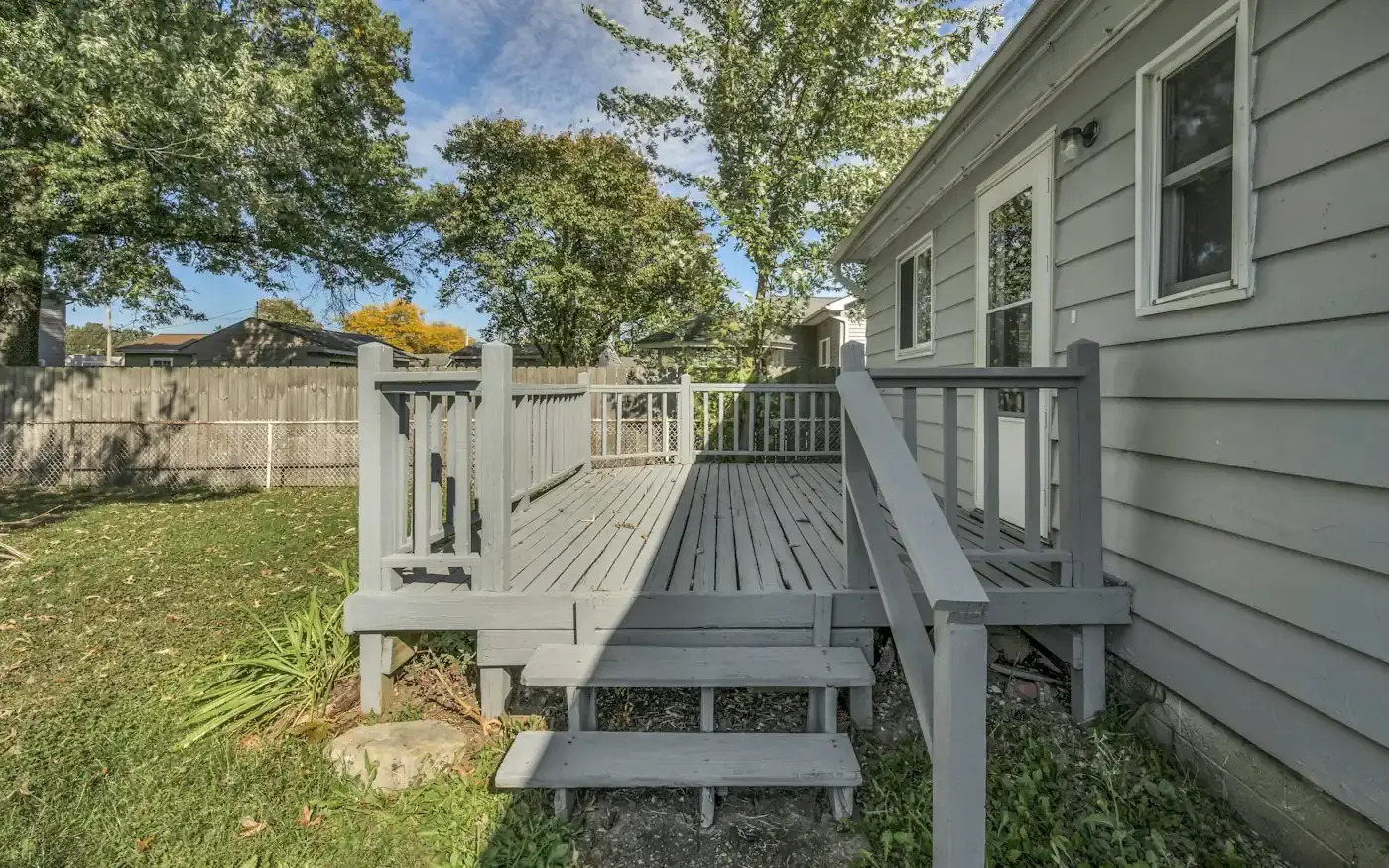
In short
- Keep every riser the same height.
- Aim for risers of about 150 to 180 mm and treads of 280 mm or more.
- Wide steps double as seating.
Steps are the part of a deck people trip on, so they are worth getting right. Good steps feel natural to walk on because every rise is the same and every tread is deep enough for a whole foot.
Sizes that work
| Part | What to aim for |
|---|---|
| Riser (height of each step) | 150 to 180 mm, never more than 190 mm on main steps |
| Tread (depth of each step) | 280 mm or more |
| Width | 900 mm minimum; 1.2 m or more feels generous |
| Consistency | All risers within a few millimetres of each other |
The Building Code sets limits on riser height and tread depth for stairs, and they differ for main and secondary stairs. Your builder will work to the current figures.
To work out the number of steps, measure from the deck surface to the ground and divide by about 170 mm. A deck 680 mm high needs four risers of 170 mm, which is three treads plus the deck itself.
Handrails and balustrades
- Where someone could fall 1 metre or more from the steps or the deck, a barrier is required.
- Longer flights need a handrail under the Building Code. Even on two or three steps, a handrail is a kindness to older visitors.
- Open risers on taller stairs must not leave a gap a small child could fit through.
Styles of deck steps
Box steps
One or two wide, shallow platforms. Ideal for low decks. Simple to build and good to sit on.
Full-width steps
Steps that run the whole length of one side of the deck. They make a deck feel connected to the lawn and remove the need for a balustrade on that edge when the deck is low.
Stringer stairs
A conventional flight with cut or housed stringers, for raised decks. Closed risers look more solid; open risers let light through.
Stairs with a landing
On tall decks, a landing halfway breaks the climb and lets the stair turn a corner.
Building them to last
- Stringers should sit on a concrete pad or pile, not on bare ground.
- Use timber treated for the conditions: H3.2 above ground, H4 or H5 where it touches the ground.
- Treads should shed water. A small gap between two boards per tread works well.
- In frosty or shaded spots, add grip strips or choose a textured board.
- Step lights make a real difference after dark. Run the cable before the treads go on.
What deck steps cost
| Steps | Guide price |
|---|---|
| Two or three simple timber steps | $600 to $1,500 |
| Full-width steps along one side of a low deck | $1,500 to $4,000 |
| Full flight with handrail for a raised deck | $2,000 to $5,000 or more |
Broad guides only. Width, timber and the height of the deck change the price considerably.
Steps are usually priced as part of a deck. See deck building in Christchurch and Canterbury.
Common questions
How high should deck steps be?
About 150 to 180 mm each. The important thing is that every riser in the flight is the same.
Do deck steps need a handrail?
A barrier is required where a fall of 1 metre or more is possible, and longer flights need a handrail. On short flights it is optional but sensible.
How many steps do I need for my deck?
Divide the height from deck to ground by about 170 mm and round to a whole number. Then divide the height by that number to get the exact riser.
Can I add steps to an existing deck?
Yes. They are fixed to the deck frame at the top and supported on their own footing at the bottom.